Reading, Writing & Phonics

|
Intent
At St. Anne’s, we believe that a high-quality English curriculum empowers children to become articulate, literate, and inspired individuals. Our approach to English is deeply rooted in our understanding of the needs and potential of our pupils. Through the structured and knowledge-rich CUSP Reading and Writing curriculum, we aim to develop confident readers, expressive writers, and thoughtful speakers who engage deeply with language and literature. The CUSP English curriculum at St. Anne’s is built on a carefully sequenced literature spine, designed to give all pupils access to a wide range of high-quality, diverse and challenging texts. These texts are deliberately chosen not only for their literary merit but also for how they connect with our wider curriculum, helping pupils explore key themes, deepen understanding, and build cultural capital. Children read, write, and speak every day. Over 18 reading blocks per year, pupils explore texts in depth through explicit vocabulary instruction, fluency development, comprehension and oracy. Reading and writing is fully integrated, with writing outcomes often linked to the texts studied. This ensures that pupils write with purpose, authenticity and increasing technical control. At St. Anne’s, English is not just a subject—it is a gateway to the wider world. By developing children’s confidence and skill in reading, writing, speaking and listening, we prepare them to participate fully in their communities, now and in the future. We want all of our pupils to aspire to be more—and language is how they get there. Implementation Our English curriculum is built on the evidence-based structure of CUSP Reading and Writing, incorporating the principles of Rosenshine’s Principles of Instruction and a strong commitment to vocabulary development and fluency.
Impact The impact of our English curriculum is measured through a range of formative and summative methods. Daily feedback, discussion, vocabulary usage and written outcomes help teachers identify strengths and next steps. Retrieval practice is embedded throughout units, and assessment is used to inform responsive teaching. Pupils at St. Anne’s leave us as capable, thoughtful and creative communicators, with a deep appreciation for language and literature. They read widely, write purposefully and speak with clarity and confidence—ready to thrive in the next stage of their education and life beyond school |
Phonics
At St Anne’s Primary School we teach our children to read using the Read Write Inc phonics scheme (RWI). We believe that RWI provides the foundations of learning to help children develop into fluent readers. Children learn the 44 common sounds in the English language and how to blend these to read. The use of pictures and memorable phrases is used to aid children's retention and recall of phonemes for reading and spelling.
Implementation
At St Anne’s phonics is taught across Reception and KS1 during a daily session each morning. This is carefully delivered through a range of progressive and sequenced lessons. Following a half termly assessment, phonics groups are carefully planned to ensure focused phonics teaching is delivered for the specific needs of all pupils. Children learn alongside other children who are working at the same level.
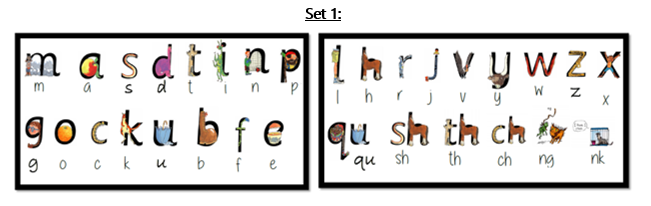
Each session is split into sections. The speed sounds section includes the teaching, reading and spelling of new sounds and the review of previously taught sounds. Phonic sounds are taught in 3 sets that children progress through across Reception & KS1.
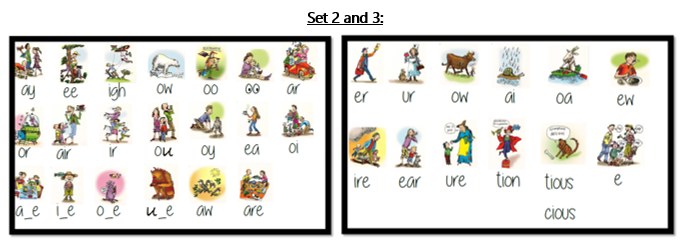
The reading section gives children the opportunity to apply their phonic knowledge and developing reading skills in context. Children progress through the coloured books as their early reading skills develop and the teaching of common exception words align with this. We use a range of fully decodable books which have been carefully organised to match the sounds that our children learn each week. Our children take home a decodable ‘Book Bag Book’ so that they are able to apply their new knowledge and phonic skills at an appropriate level.
Our phonics sessions are fast paced, clearly modelled, interactive and challenging to ensure effective learning and progress is made.
Outside of the daily phonics session, opportunities are given in classroom environments for children to further apply and practise their developing phonics skills.
Assessment
Each half term, children on the RWI programme complete a phonic assessment. These assessments support the planning of the next half term's phonics groups, to ensure that phonics teaching is being specifically delivered to support all children’s individual next steps. These assessments also help us to appraise the impact of our curriculum, whilst also informing teachers' planning for extra phonics and early reading progression outside of the daily phonics session. Children’s phonics knowledge and early reading skills are assessed as part of EYFS profile assessment at the end of Reception and by undertaking the Phonics Screening Test at the end of Year 1.
Impact
Our curriculum aim is that children flourish into fluent, confident young readers and enjoy their phonics learning. Children know more, remember more and understand more about phonics, demonstrating this knowledge in all areas of the curriculum involving reading and writing. Children will be given a range of opportunities to showcase their developing phonics and early reading skills throughout the school day.

Home reading is very important and takes high priority at St Anne's. We work hard to promote a positive reading culture across the school and work together with parents to support them with home reading at school.
Children have access to a wide range of different books and are expected to read daily.
In Reception and KS1, children’s home reading books are linked to the phonics phase they are secure at. In KS2, children’s home reading books are linked to their reading ability. Children have a reading level which staff and children use to choose suitable books. Parents are asked to make comments and sign their child’s Home Reading Record to show that they have supported their child with their reading. These comments are used by staff to monitor the frequency of reading at home and provide additional support to children in school.
We celebrate the efforts of children with their home reading at St Anne's during our Friday Award Assemblies. The class with the highest percentage of books returned each week is awarded William - the school reading worm - to display in their class and a sweet treat to celebrate their success!